

Complete Guide to Document Attestation in the UAE (2026)
Moving to the UAE for work, education, business, or family reasons often involves more paperwork than people expect. One of the most important requirements is document attestation—a process that verifies the authenticity of documents issued in another country before they can be accepted by authorities in the UAE.
Whether you are a professional accepting a new job in Dubai, an entrepreneur setting up a company in Abu Dhabi, a student pursuing higher education, or a family applying for sponsorship, understanding document attestation can save significant time, money, and frustration.
This guide explains everything you need to know about document attestation in the UAE, the documents commonly involved, the process, common mistakes, and how professional assistance can help.
- What Is Document Attestation?
- Why Is Document Attestation Required in the UAE?
- Types of Documents That Require Attestation
- The UAE Document Attestation Process
- Common Situations Requiring Attestation
- Common Attestation Challenges
- Why Professional Attestation Services Matter
- How Long Does Document Attestation Take?
- Choosing the Right Attestation Partner
- How Paper Pilot Professional Services Can Help
- Frequently Asked Questions
What Is Document Attestation?
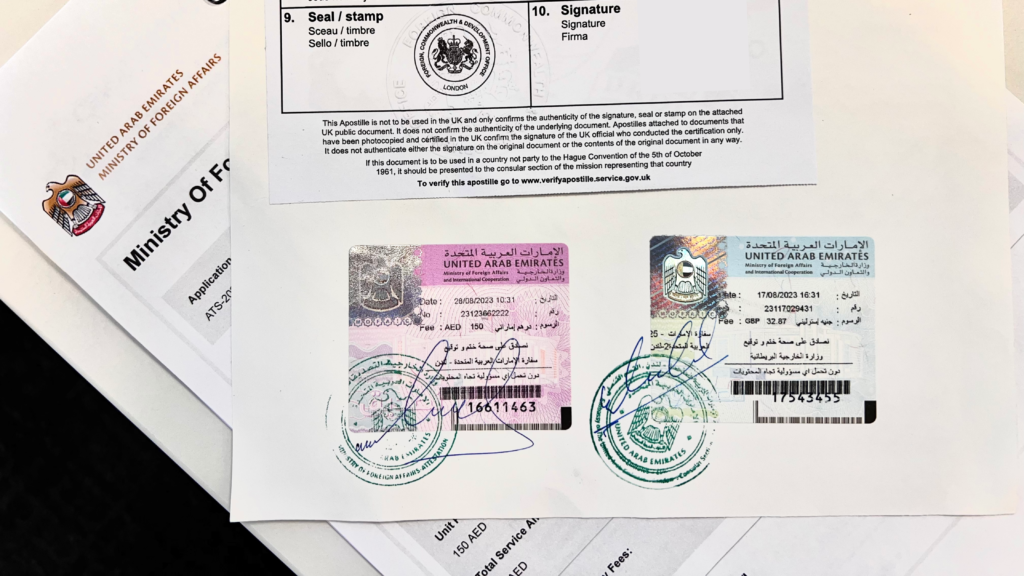
Document attestation is the process of certifying that a document is genuine and legally valid for use in another country.
The UAE government requires many foreign-issued documents to undergo attestation before they can be accepted by:
- Immigration authorities
- Employers
- Educational institutions
- Banks
- Courts
- Government departments
- Licensing authorities
The process involves obtaining official verification from designated authorities in both the issuing country and the UAE.
In simple terms, attestation confirms that your document is authentic and can be trusted by UAE authorities.
Why Is Document Attestation Required in the UAE?
The UAE hosts millions of expatriates from around the world. Since documents originate from numerous countries and educational systems, authorities need a standardized way to verify authenticity.
Attestation helps prevent:
- Fraudulent certificates
- Identity misrepresentation
- Fake educational qualifications
- Invalid commercial documents
- Unauthorized legal claims
Without proper attestation, many applications can be delayed or rejected outright.AE authorities.
Types of Documents That Require Attestation
Educational Documents
Educational certificates are among the most frequently attested documents in the UAE.
Common examples include:
- Degree certificates
- Diplomas
- School leaving certificates
- Professional qualifications
- Academic transcripts
These documents are typically required for:
- Employment visas
- Professional licensing
- University admissions
- Immigration applications
Many employers will not process work permits until educational credentials have been properly attested.
Personal Documents
Personal documents are commonly required for family-related and immigration processes.
Examples include:
- Birth certificates
- Marriage certificates
- Divorce certificates
- Death certificates
- Police clearance certificates
These documents are often necessary for:
- Family sponsorship
- Residency applications
- Child enrollment
- Legal proceedings
- Inheritance matters
Commercial Documents
Businesses operating in the UAE frequently require attested commercial documents.
Examples include:
- Memorandum of Association
- Articles of Incorporation
- Power of Attorney
- Board Resolutions
- Commercial Invoices
- Agency Agreements
Commercial attestation becomes particularly important when:
Participating in government tenders
Establishing UAE operations
Opening corporate bank accounts
Appointing representatives
Conducting international trade
The UAE Document Attestation Process
The UAE hosts millions of expatriates from around tAlthough procedures vary slightly depending on the country of origin, the general process follows several stages.
Step 1: Local Verification
Documents are first authenticated by relevant authorities in the issuing country.
For educational certificates, this may involve:
- Educational institutions
- Examination boards
- State authorities
For personal documents, local registrars or government offices may be involved.
Step 2: Ministry Authentication
The document is then verified by the foreign affairs ministry or equivalent authority in the issuing country.
This confirms that previous certifications are genuine.
Step 3: UAE Embassy Attestation
The UAE Embassy or Consulate in the issuing country validates the document for use within the UAE.
This is one of the most important stages in the process.
Step 4: UAE Ministry of Foreign Affairs (MOFA)
Once the document arrives in the UAE, it usually requires final authentication by the UAE Ministry of Foreign Affairs (MOFA).
After MOFA attestation, the document is generally accepted by UAE authorities.